Description
Making the Invisible Visible Learn key skills in abstract art whilst exploring how to create abstract and semi-figurative work Exploring Colour, Form and Personal Expression (Five Week Course)
This course is about moving beyond simply representing what we see to discover and express the essence of people, places, objects and experiences.
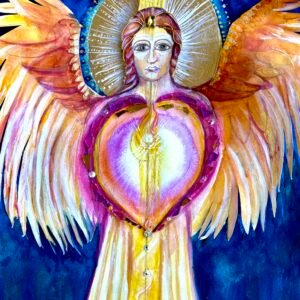
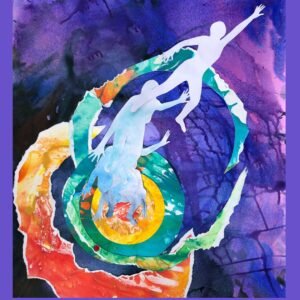
Drawing inspiration from artists including Picasso, Pollock, Kandinsky, Kapoor and Rothko, this course explores how abstraction—alongside more figurative approaches—can become a powerful language for personal expression. From expressive semi-figurative work to fully non-figurative painting, you’ll discover the approach that most authentically expresses your own way of seeing.
You’ll explore a range of creative approaches and techniques as a foundation for discovering your own authentic visual language and developing your ideas in new directions.
What You’ll Explore
- Drawing, painting, colour, shape, form and texture
- The senses and different ways of seeing
- Moving between recognisable, semi-figurative and abstract work
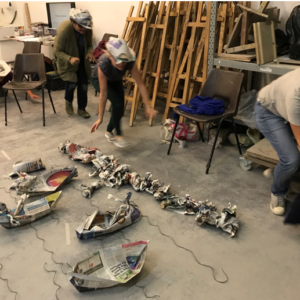
- Developing ideas from 2D into 3D
- How some of the most influential and extraordinarily talented artists have used colour, mark, shape and form as a powerful visual language
How we’ll work
Across five workshops you will:
- Experience guided demonstrations and practical experimentation.
- Explore a wide range of materials, techniques and creative processes to encourage freedom and creative discovery.
- Apply each new process to your own personal creative enquiry.
- Receive individual guidance throughout the course.
- Develop a body of experimental work alongside more resolved pieces.
Suitable for beginners and experienced artists alike.
Materials
Provided
- Basic paper
- Drawing materials
- Wire and clay
Please bring
- Student-quality acrylic paints or Watercolours/gouache.
- A selection of round and flat brushes.
A detailed materials list will be sent after booking.
What participants say
“I just wanted to say how supportive and freeing I found your workshop. You are a great teacher and the workshops are all art teaching should be. I would highly recommend your workshops to anyone—beginner or established artist. You’ve inspired me to apply for a formal Art qualification—something I never thought I would do.” Elaine W.
“Exceptional teacher. Lorna created a space that creatively freed me. A deeply enriching experience.”
About Lorna Carmen McNeill
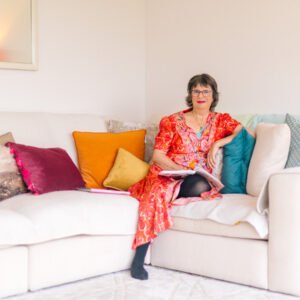
Lorna Carmen McNeill is a mixed media and light artist, teacher and creative process facilitator. She studied Fine Art at Camberwell School of Art, Goldsmiths and The Art Academy, and has taught across higher and further education, the NHS, charitable organisations, community settings and corporate environments.
Her work is rooted in the understanding that creativity is far more than artistic skill—it is a way of being and perceiving, responding to and engaging with the world. Through carefully designed creative processes, Lorna creates supportive and inspiring environments where participants develop artistic confidence, technical skills and a deeper connection with their own innate creativity. As their confidence grows, they discover their own unique way of seeing, responding and making, enabling an authentic visual language to emerge naturally.